


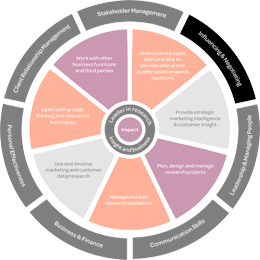
Influencing & Negotiating
Training
Global Insight Academy
Training
On-demand
Bespoke company training
Qualifications
CPD
Resources
Accreditation
- MRS Qualifcations accredited centre area
- List of MRS Qualification accredited centres
- Become an MRS Qualification accredited centre
- Accredited CPD training providers
- Recruiter Accreditation Scheme/Recruiter Training Programme
- Register of RAS Accredited Recruiters
- Register of Recruiter Accredited Companies
- RAS - FAQs
Mentoring
Apprenticeships
ESRC PhD Placements
 Share
Share
Understanding how to influence others and to negotiate effectively are crucial skills in today’s business climate, whether upwards or sideways within an organisation, or with external clients or suppliers.
Knowledge, Skills and Attitudes
1. Establish and prioritise objectives and any compromise negotiation positions
2. Identify key internal and external stakeholder, likely to influence desired objectives
3. Research and identify the strength of any negotiation positions and likely counter positions
4. Identify any potential challenges in negotiations and devise solutions to overcome these
5. Devise and implement appropriate communication strategies for all parties involved in delivering any negotiation positions
6. Identify and communicate with individual stakeholders that may assist in delivering desired objectives
7. Devise different strategies to enable alternative negotiation positions to be delivered to obtain desired results
8. Maintain clear and accurate records of negotiations, outcomes and agreements achieved
Essentials of Quantitative Research
Virtual training course
Data collection, sampling, analysis, presentation.
Story Techniques to Support Strategic Thinking
London
Enhance your ability to think and write more strategically by applying storytelling techniques that will inspire your audience to act.
Statistical Methods Masterclass
Virtual training course
Multivariate and other statistical techniques for use in research.
Get the latest MRS news
Our newsletters cover the latest MRS events, policy updates and research news.






©2026 The Market Research Society,
15 Northburgh Street, London, UK EC1V 0JR
Tel: +44 (0)20 7490 4911 Email: info@mrs.org.uk
The Market Research Society (MRS) is the world's leading research association. For all those who need, generate or interpret the evidence for making good business and policy decisions. Click here to find out more about us.
©2026 The Market Research Society,
15 Northburgh Street, London EC1V 0JR
Tel: +44 (0)20 7490 4911 Email: info@mrs.org.uk