


Communication skills
Training
Global Insight Academy
Training
On-demand
Bespoke company training
Qualifications
CPD
Resources
Accreditation
- MRS Qualifcations accredited centre area
- List of MRS Qualification accredited centres
- Become an MRS Qualification accredited centre
- Accredited CPD training providers
- Recruiter Accreditation Scheme/Recruiter Training Programme
- Register of RAS Accredited Recruiters
- Register of Recruiter Accredited Companies
- RAS - FAQs
Mentoring
Apprenticeships
ESRC PhD Placements
 Share
Share
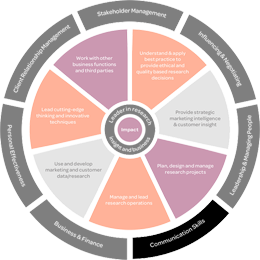
Effective communication skills are key to developing internal and external relationships and for contributions and recommendations to be effectively interpreted and applied.
Knowledge, Skills and Attitudes
1. Identify and clarify stakeholder communication needs and preferences, including any communication challenges
2. Develop and implement communication strategies appropriate for your stakeholders
3. Assess communication skills identifying strength and weaknesses
4. Develop a plan to address any communication weaknesses
5. Implement plans to address weaknesses, and monitor effectiveness of steps taken
6. Adapt communication skills to address stakeholders' needs, preferences and to address any specific challenges
7. Seek assistance and support when communication fails to meet the needs of stakeholders
Synthetic Data Under the Hood: Technologies, Models and Research Implications
Virtual training course
&more Virtual Conference 2026
online
Think Again: What's next for research?
This year marks two milestones: the 8th &more Virtual Conference and 80 years of the Market Research Society. To celebrate both occasions, we're bringing together the next generation of researchers for a day of fresh ideas, practical learning and honest conversations.
Essentials of Quantitative Research
Virtual training course
Data collection, sampling, analysis, presentation.
Get the latest MRS news
Our newsletters cover the latest MRS events, policy updates and research news.






©2026 The Market Research Society,
15 Northburgh Street, London, UK EC1V 0JR
Tel: +44 (0)20 7490 4911 Email: info@mrs.org.uk
The Market Research Society (MRS) is the world's leading research association. For all those who need, generate or interpret the evidence for making good business and policy decisions. Click here to find out more about us.
©2026 The Market Research Society,
15 Northburgh Street, London EC1V 0JR
Tel: +44 (0)20 7490 4911 Email: info@mrs.org.uk